Fixed Triangular Solar Concrete Roof: Reshaping the Future of Sustainable Design — When Buildings Become Generators
Mar 04, 2026
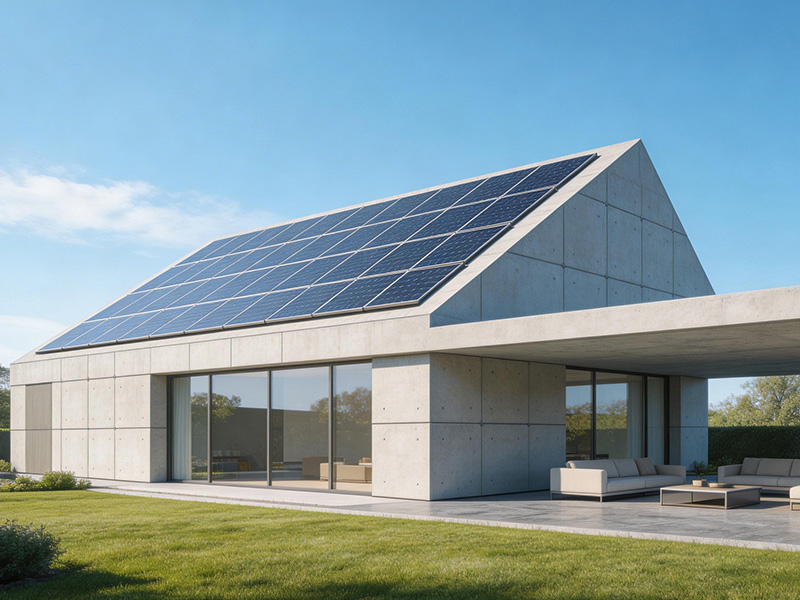
With the deep integration of sustainable buildings and renewable energy, the market's pursuit of architectural aesthetics and energy efficiency has reached new heights. The traditional "roof + solar panel" model can no longer meet the needs of high-end building projects. Against this backdrop, the fixed triangular solar concrete roof has emerged. This innovative technology not only redefines the function of the roof but also achieves a perfect unity of structural load-bearing, waterproofing, and energy production by seamlessly integrating photovoltaic systems into the building structure.
🏗️ Breaking the Traditional MoldIn traditional building design, the roof is responsible for sheltering from wind and rain, while solar panels are added later and hung on the roof. This model often faces two major pain points: damage to the overall aesthetics of the building and the maintenance difficulties caused by the mismatch in the lifespan of the two materials. The fixed triangular solar concrete roof, however, adopts the Building-Integrated Photovoltaics (BIPV) concept, using Ultra-High Performance Concrete (UHPC) as the base and directly integrating the solar power generation layer into the building skin. Its unique triangular geometry, with its excellent mechanical stability, can achieve large-span, column-free or column-reduced coverage spaces, completely liberating the usable area beneath the roof and providing architects with unprecedented creative freedom.
🔋 Performance & IntegrationThis lightweight, high-strength, and highly weather-resistant concrete photovoltaic panel can perfectly adapt to various harsh climatic environments. Through precise roof tilt and orientation design, it maximizes the capture of solar radiation, providing clean electricity for buildings. Simultaneously, the excellent thermal inertia of concrete effectively blocks external heat, providing insulation and reducing air conditioning energy consumption. More importantly, it completely seals the photovoltaic system under robust concrete, completely solving the problems of traditional photovoltaic modules being susceptible to wind and rain erosion, posing fire hazards, and difficult maintenance, achieving an integrated solution of waterproofing, fireproofing, windproofing, and power generation.
🏡 Economic & Aesthetic AdvantagesIn BIPV projects, the fixed triangular solar concrete roof, through precise modular design and prefabrication, can meet the requirements of different architectural styles and functional needs regarding lighting, load-bearing capacity, and aesthetics. Using this structure, buildings not only eliminate the need for additional roofing materials (such as tiles and waterproof membranes) but also save on the cost of installing traditional photovoltaic brackets. Statistics show that a residential building using this technology can generate enough clean electricity annually from its roof to cover 30%-50% of its daily electricity consumption. Combined with an energy storage system, it can even achieve a "zero-energy" building. Through the building's own energy production, not only are long-term electricity costs significantly reduced, but carbon emissions throughout the building's entire lifecycle are also significantly lowered.
🌍 ConclusionIn summary, the application of fixed triangular solar concrete roofs demonstrates significant advantages and economic benefits in high-end residential and public buildings. It not only improves the efficiency of land and building space utilization but also achieves a synergistic enhancement of value across three dimensions: architectural design, energy production, and environmental protection. With the increasing advancement of green building and carbon neutrality goals, this innovative roof system, which perfectly integrates structure, aesthetics, and energy, will play an increasingly crucial role in future sustainable building design. For more cutting-edge information on building-integrated photovoltaics (BIPV), please follow Solar First!
And follow us on social media to get more information about our product system:
▶ FACEBOOK
▶ YOUTUBE
▶ LINKEDIN




 Rede IPv6 suportada

 Português


